Bonn Climate Change Conference 2026 / Week Two Article 6 Digest
A briefing on Week Two of the Bonn Climate Change Conference 2026 from the Article 6 Observatory on the ground.

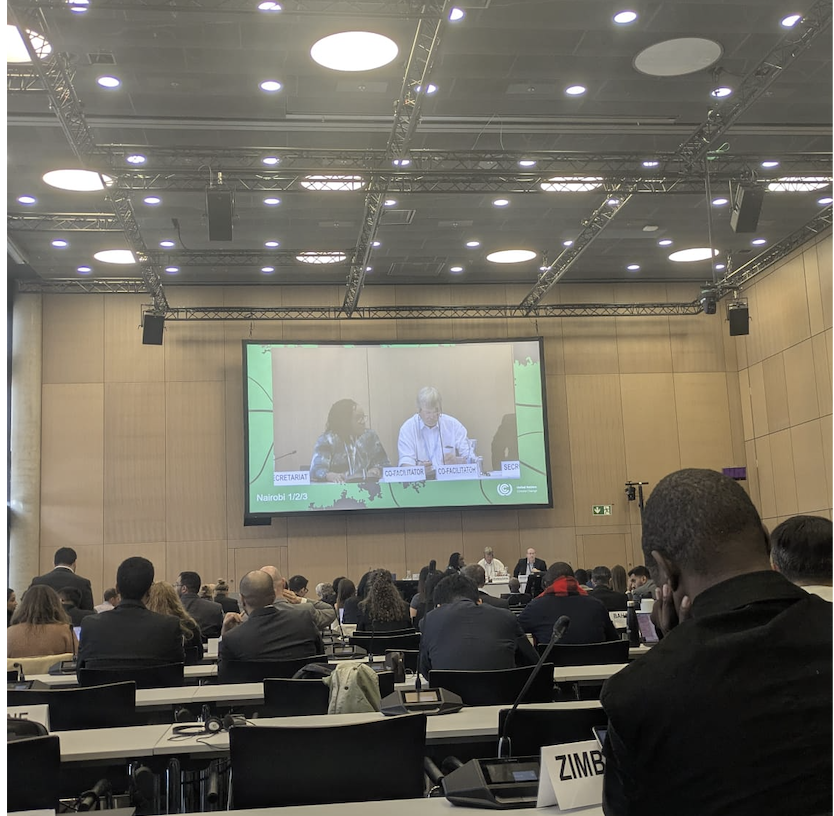
Following on from our Week One analysis, the official UNFCCC Article 6 agenda for Week 2 of SB64 included two days of negotiations on Article 6.2 and Article 6.8 as well as side events, including on the wind-down of the Clean Development Mechanism.
Article 6.2: Cooperative Approaches
Overall Week Two saw funding negotiations conclude at the SBI, but long-term questions related to the financing of Article 6.2. The discussion was driven by growing concern over a shortfall in funding for core Article 6.2 infrastructure. This shortfall, which was USD 8 million in 2024-2025, stalled progress on building the registry and oversight procedures as noted in a pre-session report from the UNFCCC Secretariat. While Parties broadly agreed that sustained funding is required to maintain key functions, including the international registry, Article 6 technical expert reviews (A6TERs) and capacity-building support. However, ultimately they remained divided on how such funding should be mobilised and on what principles (see Paragraph 1, Informal Note).
Developing country groups, including the LMDCs, Arab Group, AGN, AOSIS and LDCs, consistently opposed financing approaches that could impose additional costs on participating Parties. Several argued that Article 6 infrastructure delivers transparency and environmental integrity benefits for the Paris Agreement as a whole and should therefore continue to be funded through core budget resources and voluntary contributions as it has been in the past. Several developed country Parties, including Switzerland and the European Union, were more open to exploring user-based funding models, particularly in situations private entities directly benefit from registry services and transaction infrastructure.
The final compromise largely deferred substantive decisions on this until COP31. Parties agreed to recall relevant CMA7 decisions on voluntary contributions and requested additional information from the Secretariat on funding needs and available resources through existing reporting channels and urged them to “strengthen their fundraising efforts” (Paragraph 7, Conclusions).
Article 6.8: Non-Market Approaches
Negotiations on the review of the Article 6.8 work programme concluded following agreement on a procedural compromise that will carry discussions forward to SBSTA 65. As per the Secretariat’s presentation during Week One of Bonn, while there is high awareness of the mechanism, it has been found to have mixed effectiveness, The central issue throughout Week Two concerned how Parties should respond to the mandate agreed at CMA7 regarding additional functionalities for the Non-Market Approaches (NMA) Platform, and the cost implications of this.
Several Parties, including the European Union and AILAC, advocated exploring additional functionalities that could improve visibility of non-market approaches, strengthen interconnectivity with external platforms and enhance support for implementation. By contrast, the LMDCs, Arab Group, AGN and Egypt repeatedly cautioned against expanding the platform beyond its existing mandate and emphasised the need to preserve its original purpose. Following extensive consultations, Parties agreed that the SBSTA Chair will prepare an informal document informed by views expressed during Bonn for consideration at SBSTA 65. The option proposed by AILAC to enable Parties to submit evidence as part of this review, was rejected, noting that Parties are always free to send information to the SBSTA chair.
This compromise avoids prejudging future outcomes while allowing discussions on the future direction of Article 6.8 to continue. However, fundamental differences remain among Parties as they head to Antalya, as captured by the latest Informal Note. Such divergences include whether Article 6.8 should remain as a workstream and if so whether the NMA Platform should remain primarily an information-sharing tool or evolve into a more implementation oriented mechanism, and what its scope should be.
Clean Development Mechanism Transition
Outside of the formal negotiating rooms there was the growing focus on the practical completion of the Clean Development Mechanism (CDM) transition process. At a dedicated side event, UNFCCC officials provided updates on implementation of the CMA7 decisions governing the phase down of the CDM and transition of eligible activities into the Paris Agreement Crediting Mechanism (PACM). The Secretariat reported that transition requests had been received from approximately 80 host Parties covering more than 300 activities, with expectations that this number could increase further before the June 2026 deadline for host Party approvals. Officials also highlighted a series of upcoming deadlines that will determine the final disposition of both CDM activities and Certified Emission Reductions (CERs), including:
- 30 June 2026: deadline for host Party approval of eligible CDM activity transitions;
- 31 December 2026: completion of remaining transition processes;
- September 2026: expected final meeting of the CDM Executive Board; and
- Mid-2027: completion of the formal phase-down process.
Discussions also revealed that approximately 20 million CERs remain potentially eligible for transfer into the PACM registry, although transfers are not automatic and require action by account holders .Several speakers reflected on the CDM’s legacy, emphasising both its contribution to capacity building and climate finance mobilisation, as well as the lessons learned that have informed the design of Article 6 mechanisms. The event served as a reminder that while Article 6 implementation continues to accelerate, the Kyoto architecture still has an impact. One of these areas of most concern, is any potential gap in funding for the Adaptation Fund which may result due to the PACM, and its attendant share of proceeds of 5%, potentially not yet being fully operational by the time of CDM closure.
Outlook for Antalya
Week Two in Bonn delivered relatively modest negotiating outcomes but provided important signals about the next phase of Article 6 implementation. The funding debate under Article 6.2 remains unresolved, the future direction of the Article 6.8 framework remains contested, and Parties continue to grapple with how ambition and environmental integrity should be operationalised in practice.
At the same time, discussions throughout Bonn demonstrated a broader shift across Article 6. The focus is increasingly moving away from rulemaking and toward implementation, infrastructure, reporting and operational delivery. As Parties prepare for SBSTA 65 and COP31, the challenge is no longer designing Article 6: it is ensuring that the systems now being built can deliver the ambition and integrity that the Paris Agreement requires.