Article 6 Updates: June 2026
Welcome to the Article 6 Observatory’s monthly update reviewing the latest developments from around the world related to Article 6.

Bonn Climate Change Conference- SB64
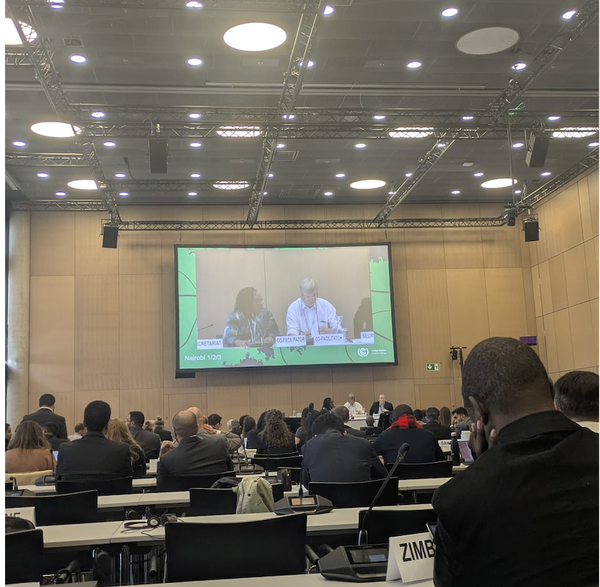
The Bonn negotiations marked an important mid-year flashpoint for developments under Article 6 of the Paris Agreement. Much of the political attention has now moved beyond negotiating the remaining elements of the Article 6 rulebook towards the more practical challenge of implementation. As illustrated in the Article 6 Observatory’s Week One and Week Two negotiation summaries, Parties increasingly focused on how existing rules can be operationalised in practice, reflecting growing recognition that the success of Article 6 will ultimately depend less upon additional formal decisions and more on the effectiveness of national implementation.
Article 6.2
The implementation of cooperative approaches under Article 6.2 continued to accelerate during June, both at Bonn and beyond. Discussions related to the implementation of the Article 6.2 agenda in Bonn largely centred on the two-day Ambition Dialogue which highlighted practical implementation challenges, including governance arrangements, NDC alignment and reporting requirements. Formal negotiations also focused primarily on funding arrangements for the central reporting and oversight processes, such as the Centralised Accounting and Reporting Platform (CARP) and system of Technical Expert Reviews (TERs).
Several governments also advanced domestic governance arrangements and operationalised bilateral cooperation agreements under Article 6.2 during June. Chile remained one of the most active host countries during the month. Building upon its existing bilateral cooperation agreement with Switzerland, the government authorised a second standalone battery energy storage system mitigation activity under Article 6.2, illustrating how cooperative approaches are expanding beyond traditional renewable electricity generation towards technologies that facilitate broader energy system transformation. Chile also authorised a landfill gas project while continuing preparations to operationalise bilateral cooperation agreements with Japan and Singapore. In parallel, the government announced the appointment of a technology provider to develop its unified national carbon registry and further opened a special call to form a public-private working group aimed at promoting energy projects under Article 6 of the Paris Agreement.
Elsewhere, bilateral cooperation continued to broaden both geographically and institutionally. India and Japan adopted the operational rules governing their Joint Crediting Mechanism (JCM), establishing India’s first operational bilateral framework capable of generating internationally transferred mitigation outcomes under Article 6.2. The Carbon Markets Association of India also launched an Article 6 Carbon Bazaar to facilitate participation by Indian businesses and project developers in emerging Article 6 opportunities.
Across Southeast Asia, Singapore and Indonesia continued negotiations towards finalising the implementation arrangements underpinning their bilateral Article 6 cooperation agreement. Malaysia and South Korea announced a new cooperation on biogas development with the intention of pursuing future mitigation activities under Article 6. Collectively, these developments demonstrate that bilateral cooperation is increasingly progressing beyond framework agreements towards practical implementation and investment.
Rather than pursuing unrestricted transfers of mitigation outcomes, several countries began articulating clearer strategic approaches to balancing international cooperation with achievement of domestic climate objectives. Kenya’s announcement that it intends to limit transfers of internationally transferred mitigation outcomes (ITMOs) to approximately 10 million units through 2030 represented one of the clearest examples of this emerging trend. The announcement prompted considerable discussion regarding future supply constraints within Article 6 markets and may signal a broader shift towards more strategic management of international transfers by host countries. Such considerations are necessary given the inconsistencies outlined in TERs released this month including those for Zimbabwe, Cambodia, Rwanda, Malawi, Mongolia, Sri Lanka and Palau.
A range of approaches was evident in several updated Nationally Determined Contributions (NDCs) Parties submitted during June. In its new NDC 3.0 Algeria identified Article 6 cooperation as a mechanism for supporting implementation of its updated conditional NDC target. Cameroon’s new NDC 3.0 likewise highlighted international carbon markets as a potential source of investment for achieving its expanded climate ambitions. By contrast, the Dominican Republic’s NDC 3.0 reaffirmed its intention to participate voluntarily in Article 6 cooperation while explicitly stating that internationally transferred mitigation outcomes would not be used to achieve its own NDC. Guyana highlighted in its revised NDC that its issuance of “market-facing credits” would be limited to those permitted under the rules of ART-TREES. Malawi has illustrated that it intends to leverage opportunities under Article 6 of the Paris Agreement and other carbon market mechanisms to attract private investment. The Government of Timor-Leste has noted that while it is not ready to implement Article 6 yet, it is prioritising existing and new land tenure reform efforts over the 2022-2030 period to improve the enabling environment for nature-based solutions projects under Article 6. Benin has indicated that it intends to use both climate finance and Article 6 to achieve its emission reduction targets.
Indicators of this broader implementation trend was the continued expansion of institutional readiness across prospective host countries. Peru submitted its Initial Report under Article 6. Ukraine adopted a pilot framework establishing procedures for authorising, issuing and transferring mitigation outcomes alongside regulations governing a new National Carbon Registry. Ecuador approved its first dedicated regulations governing authorisation, registration, traceability and transfer of mitigation outcomes known as the Technical Standard for the Authorization, Registration, Traceability and Transfer of Mitigation Results (ARTTRM). Such developments demonstrate that governments are increasingly prioritising the domestic governance arrangements necessary to participate credibly in cooperative approaches.
Article 6.4
Work under the Paris Agreement Crediting Mechanism (PACM) continued to advance steadily throughout June. While there were no formal negotiations at Bonn, there were a number of capacity building discussions increasingly centred on the institutional, methodological and administrative systems required to enable the mechanism to operate effectively in practice. Throughout the month, the Article 6.4 Supervisory Body continued to translate the framework established through previous CMA decisions into the practical infrastructure necessary to support project registration, credit issuance, corresponding adjustments and public transparency.
A particularly significant development was the publication of the draft Procedure: Article 6.4 Mechanism Registry for public consultation. The draft provides the most comprehensive description to date of how the mechanism registry is intended to function, including procedures governing account administration, issuance, first transfers, cancellations, transaction recording, public reporting and administrative arrangements. Of particular importance are the proposed provisions relating to the first transfer of Article 6.4 emission reductions and enhanced “real time” public visibility of registry transactions, both of which are central to ensuring transparency and confidence in the emerging market infrastructure. The public call for input runs from 23 June - 7 July 2026.
Another public consultation also launched on the Sustainable Development Tool from 30 June- 28 July 2026.This is designed to enable local stakeholders, including local communities and Indigenous Peoples, are invited to provide input on environmental and social impacts and sustainable development impacts of a proposed Article 6.4 projects.
Methodological development likewise continued throughout June as the Supervisory Body expanded the technical foundations required for implementation. Building upon the work undertaken during recent meetings, further progress was made across the growing portfolio of methodologies and methodological tools intended to support mitigation activities under the PACM. Public consultations were held on two proposed methodologies: A6.4-PMM008, addressing leak detection and repair within natural gas transmission and distribution systems, and A6.4-PMM009, concerning greenhouse gas emission reductions achieved through low-carbon navigation for passenger vessels.
Host country engagement under Article 6.4 also continued to broaden during the month with many Parties submitting Host Party Participation Forms, including Lao PDR, Honduras, Liberia, Cabo Verde, Mozambique, Democratic Republic of Congo, Malawi, Gabon, Argentina, Mongolia, Thailand, Nigeria, and the Côte d'Ivoire. Although these submissions do not constitute project approvals, they provide an important indication of how governments are beginning to operationalise the PACM, providing insight as to the types of projects that could receive authorisation in future.
The gradual operationalisation of the PACM was accompanied by another symbolic milestone of June 30th 2026 which was the deadline approached for eligible Clean Development Mechanism (CDM) activities to request transition into the Article 6.4 mechanism. Emerging evidence suggests that only a relatively small proportion of eligible projects completed the transition process by the deadline, despite this having been extended at COP30.
Research Insights
Several significant reports published during June contributed to the evolving discussion surrounding implementation of Article 6 and the future direction of international carbon markets.
Questions surrounding environmental integrity also featured prominently during June. Analysis published by the NewClimate Institute examined how several prospective buyer and host countries are approaching Article 6 implementation, concluding that international cooperation can only strengthen global climate ambition where it complements rather than substitutes for domestic emissions reductions.
In a commentary published by the Kleinman Center for Energy Policy, Danny Cullenward reflects on the transition from developing the PACM’s core methodological standards towards expanding its portfolio of approved methodologies. The analysis highlights the increasing importance of methodological tools, stakeholder developed methodologies and the continued evolution of the Methodological Expert Panel as the PACM moves from institutional design towards operational delivery.
A comparative assessment published through the CO2RE programme examined the treatment of biochar under the PACM, the EU Carbon Removal and Carbon Farming Regulation (CRCF) and the Integrity Council for the Voluntary Carbon Market’s Core Carbon Principles. The study identifies areas of convergence while also highlighting important differences relating to permanence, monitoring requirements, sustainability safeguards and governance. As carbon removals continue to assume a more prominent role within international climate policy, improving coherence between these emerging frameworks is likely to become increasingly important.
Join us
If you are interested in diving deeper, the Article 6 Observatory is open for membership applications (for individuals) as well as for institutional affiliation (for organisations). Membership is free, you can read more and apply here.